(img alt= height="1" width="1" style="display:none" src="https://www.facebook.com/tr?id=826411655851847&ev=PageView&noscript=1"/)
20Jun

How Yoga Anatomy Helps You Become a Better Yoga Teacher

Often people choose Yoga as a means to fix something damaged. Whether it is their poor postures, breath work techniques or even an in general practice to build meditation awareness. As one begins to learn and practice yoga they realize that yoga is way more than just the simple asana practice or helping to make through the 20 minute Yoga flow sequence that they are following.

Functional Anatomy in Yoga is perhaps one of the most important subjects of yoga teacher training courses today. Even though anatomy may appear a bit intimidating especially because it is related to muscles, joints and bones. But in reality it is not as complex as people think of it to be.

Perhaps the science of alignment is one of the most fundamental requirements in Yoga and this can be easily learned by people whether or not they come from a medical background. Anatomy helps to connect the traditional yogic wisdom with the science based movement and learning about anatomy in yoga not only helps one in adaptation. But also creating safe classes along with delivering therapeutic benefits to the practitioners.

What is Meant By Yoga Anatomy?

Yoga anatomy is simply the study about how structures function during yoga practice. It involves learning about the alignment of the bones, muscles, joints movement, mobility, breath work techniques, posture balance and functional movement patterns.

So unlike a complicated medical terminology, yoga anatomy teaches the instructors to learn about body mechanics and be able to bring modifications to support student safety. Anatomy is yoga is not just limited to how a certain posture appears but it reflects to a deeper understanding about how the body is reacting to the posture.

Therefore the knowledge about yoga alignment is one of the most important aspects of Yoga Teacher Training Courses, especially the foundational YTT courses such as the 200 Hour Yoga Teacher Training goa.

How Anatomy Helps One Become a Better Yoga Teacher?

Enables Teachers Understand Individual Differences

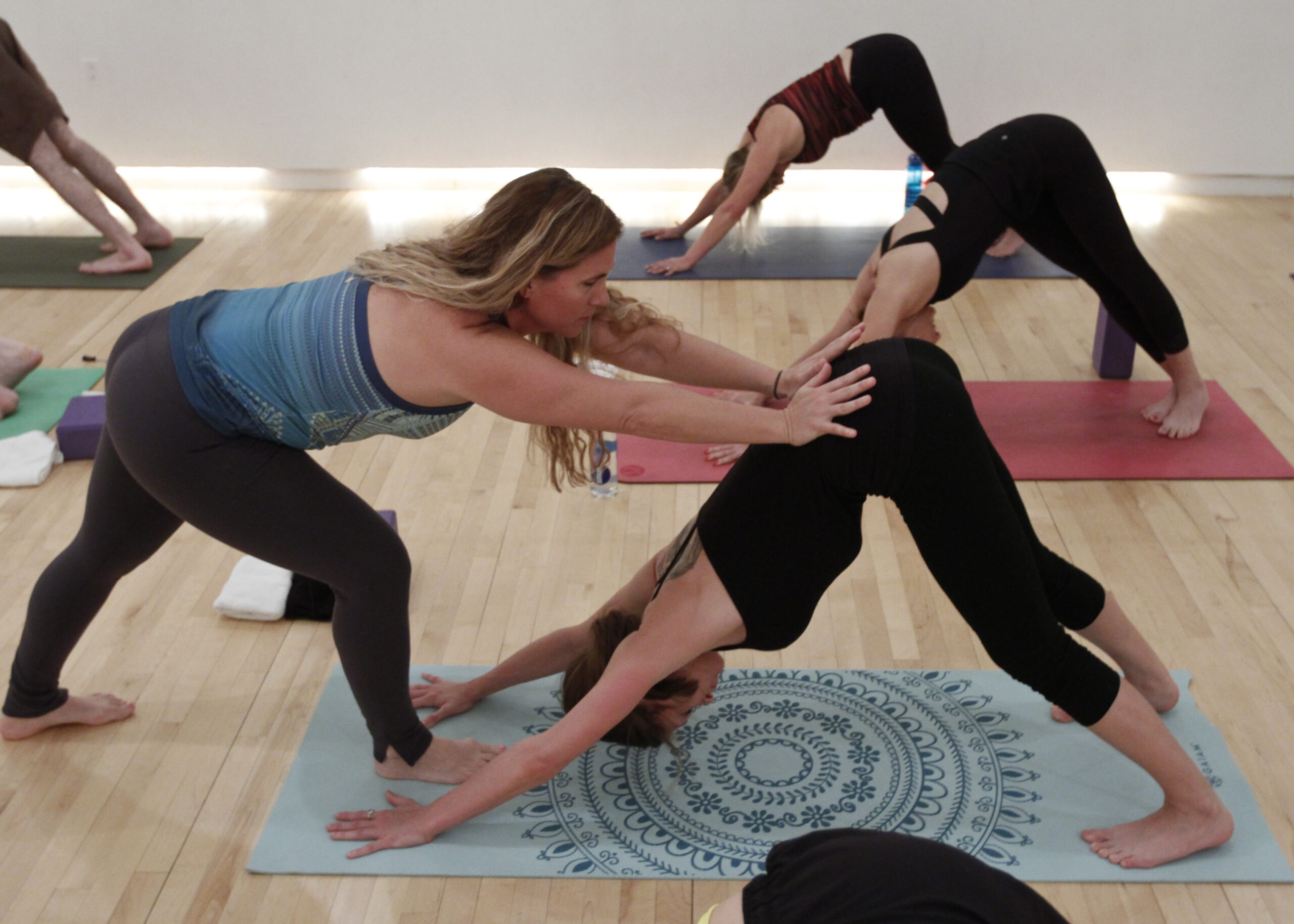
Yoga Alignment and Adjustment knowledge helps teachers to understand individual differences as yoga is not a one size fits all approach. Therefore when you are addressing a certain group of students each will have a unique body type. Some may have tightness in hips, some might have should injuries or back pain or even different body proportions. Having an understanding about anatomy will help one to bring in the right alignment practices and modifications so as to suit their body type in the best possible manner.

Enhances Knowledge About Anatomy & Alignment

The right anatomy and alignment knowledge will help yoga become therapeutic. Otherwise it may do more harm than good. Often when people practice yoga, they think that each posture is supposed to look the same on every body type. But in reality our human bodies are carved differently. So no two people will have the same bone structure or the same length of the limbs, joint shape strength or even flexibility. All of these factors influence how a posture appears. Therefore the right knowledge about anatomy and alignment helps correct yoga practice.

Additionally this also helps the teachers to develop effect cues that will allow the students to feel stable, safe and aware during their practice.

Helps in Preventing Injuries

One of the most important reasons of bringing the right alignment in yoga practice is to prevent injuries. It is very common to find that people end up hurting themselves while attempting a certain posture. So it is not that the posture alone is tricky but it is the fact that alignment had been ignored while practicing it.

Often when the students push themselves beyond their limits or overlook the existing conditions they end up hurting themselves. Thus the right knowledge about anatomy will help prevent injuries.

Muscular Understanding Creates Efficiency in Classes

The right knowledge about anatomy helps create a deeper understanding about muscular movements. This brings informed choices and class designs to be more balanced and purposeful.

For instance, for a class that is focused on posture improvement bringing in asana practices that target the upper back muscles or hip mobility or pose stabilizers can be effective. And for a class that is designed especially for runners focusing on hip mobility calf release and hamstring flexibility can be more effective.

Boosts Breath Awareness

Anatomy definitely boosts breath awareness. Since breath work is one of the core aspects of yoga, learning the correct way of breath work regulation in a posture or a certain yoga flow becomes a game changer. The knowledge about yoga anatomy allows the teachers to offer correct cues regarding diaphragm, rib movement, lung expansion and breath work mechanics.

Helps In Bringing Apt Modifications

The knowledge about anatomy helps in bringing appropriate modifications. Since no two people are same therefore no two students in a certain class group will have the same requirements. Therefore, recommending a same posture without any changes will not be the best way to go about it. But offering modifications that are personalized as per the students body type, mobility level, and other factors can help him support sustainable practice and allow them to participate safely.

How Yoga Anatomy Encourages Long Term Progress of Students?

The knowledge about yoga anatomy helps support long term student progress. As yoga is not about forcing anything one cannot simply skip to advanced poses without undergoing practice, gradual progress and sustainable development in their efforts. Thus the knowledge about yoga anatomy can help students boost their strength consistently, enhance mobility gradually, avoid injuries and over straining and build better body awareness.
13Jun

Transformation Timelines in Goa, Yoga Teacher Training Before, During & After

Usually when people think about yoga teacher trainings, it is not just with the goal of pursuing a professional career pathway in the wellness industry. But it is about the intention of seeking transformation throughout their yoga journey. The Yoga Teacher Training in Goa offers a journey of learning, rediscovering yourself, transformation and overall learning deeply about your own self.

Somewhere between the first intentions of undertaking a YTT journey to the long yoga classes, self reflection, emotional breakthroughs and sharing experiences with Yogic strangers you embrace unexpected experiences. This is where transformation happens.

Let’s Dive Into Learn the Transformation Timelines in a Yoga Teacher Training Before During & After.

Preparation Phase – Before Training

So the preparation phase is where the first intention about joining the training happens. It is way before you start engaging in asanas on your yoga mat. The strange part is the decision to become Yoga teacher does not happens when you are practicing some of the most advanced postures.

But it usually comes in moments of emotional changes, curiosity, burnout, transitions and the deeper desire for healing and growth. For most people a Ytt is like a reset button and a leap of faith.

Mental Preparation You Need To Do

Even before the training begins, you should be ready with the mental preparation. You will find yourself in a state of mixed emotions where you are hopeful about the journey ahead yet nervous, excited but with self doubts. So questions like –

  • Are you flexible enough?
  • Would you be able to fit in the environment?
  • Can you actually teach yoga?
  • What if you are not good enough?
  • What if you are not able to do the advanced poses by the end of the training?

These questions are pretty common and require you to have a strong mental stand and a strong desire for your yoga pursuit to be able to tackle them.

Physical Preparation

In terms of physical preparation, you need to start working on your body’s flexibility to adapt to the environment of the intensive yoga sessions you will be having during your training. So you need not be flexible already to go for the ytt experience. But it is always recommended and preferable if you are someone who practices yoga and are aware about certain basic asanas. This practice will reflect in terms of your body awareness and also better adaptation to the intense routine in your ytt.

First Week – Excitement + Reality

The next phase begins after you have joined the training. The first week will be pretty magical. The beautiful Sunsets of Goa, the golden sands, walking barefoot along the beaches and waking up to the gargle of the waves will be exciting and inspiring.

All the elements of nature in the form of the sunrise, air of the ocean, healthy meals, the environment of your yoga schools and even the global community of students you will have along with you, will excite you and inspire you.

Although, in the first week itself your training begins. So be ready to embrace falling in a schedule where you have to wake up early morning, begin your day with meditation, moving on to yoga sessions, learning yoga philosophy, teaching practice, breath work sessions etc. There is shift in intensity and this can be a bit hectic for beginners.

Week 2 – Changes Start Reflecting

The Yoga Transformation Goa will begin to change by the second week. The transformation actually starts reflecting. Your body learns to adapt. You will find yourself automatically sleeping and waking up at the same window of the day. And the repetition in your schedule in terms of your meal timings, classes, Asana Etc will bring rhythm.

As a result, you will notice your body functioning better. Your stamina increased, your postures enhanced and more mobility and flexibility. Even basic asanas will start making sense and you will flow through your practice.

Additionally your breath work will become more natural and you will be able to clearly focus without distractions during your meditations and sleep generally becomes restorative.

Week 3 & 4 – Confidence Grows & You Too Grow

By the 3rd or the 4th Week your confidence will grow and this will reflect and integrate in your practice. The transformation that you were hoping before your training did not happen overnight. You actually made it happen through a series of emotional breakthroughs, commitment, showing up on the mat even when your body resisted. And most importantly, having the willpower to make it through. By this time of the training you would have also begun to appreciate the Spiritual Yoga Journey Goa.

After The TTC – When You Return Home

Now after your training is over and you have received your certification you are credible enough to begin your classes. But you also open up to emotions like gratitude, excitement for the journey ahead, sadness for the training being over and a bit of confusion.

For many students they have to go back to their work and offices and the stress and old habits tend to reappear. This is the time when you need to maintain and be consistent with everything that you have learnt in your training.

Even though it is difficult to maintain the yogic rituals of your yoga school in normal life. Yet with discipline, consistency in practice and choosing to consciously stick to healthier routines will help you maintain the learnings and transformation of your journey.


05Jun

Trending Couple Yoga Poses for Flexibility, Balance and Deeper Connection

Spending quality time between a couple is not only about visiting cafes, elaborate dinner meetings or extensive trips which often becomes difficult given today’s hectic lifestyle. Today there has been a meaningful shift towards Wellness and this includes finding a new and a unique way to connect for partners through couple yoga poses.

Couple yoga or partner yoga is about practicing yoga together with movement, breath, communication and trust intertwined. Even though traditional yoga has emphasized the entire activity to be performed individually, a modern variation towards couple yoga shows not only collaboration but also the trust and support one can have on their partner both physically and emotionally.

Whether a practitioner is coming for a 200 hours Yoga teacher training goa to seek foundational training in yoga. Or simply for basic yoga classes and sessions that will help them feel connected and closer to their partner while also additionally being fit Yoga has something for everyone. Let’s dive in to learn some trending couple yoga postures that boost flexibility balance and foster deep connection.

Why is Couple Yoga Becoming Popular?

Couple yoga is actually yoga for connection. Since this style of yoga requires the presence of two people, it also requires two people to be perfectly aligned with each other physically mentally and emotionally. This practice not only builds trust on one another but also improves communication, patience and kindness. These emotions reflect in relationship outside yoga and strengthen the bond.

Thus, partner yoga flexibility, not only couple aware about each other body and fitness aspects but also builds communication and support in their interpersonal relationship.

Seated Breathing Pose With Partner

The seated breathing posture is actually a classic posture that literally means that you are in it together. This posture does not requires any advanced twisting of limbs. You simply need to sit together either back to back or face to face and rest against one another.

Meanwhile, you gently close your eyes and perform synchronize breath works. The coordination in the inhalation and exhalation builds rhythm relaxes the nervous system and makes you aware of the emotional presence of your partner.

Forward Fold Stretches

Forward fold stretches in partner yoga requires the couple to sit facing one another and then stretching their forward body with the support of another. The best part about this posture is that you can do it turn by turn while one performs and the other supports.

This not only effectively stretches your shoulders, hamstrings and the lower backs, but also builds communication, couple flexibility and trust in movement.

Double Tree Pose

A tree posture is perhaps one of the most easiest and effective yoga postures. While it is pretty easy to perform this asana individually on your own but when you’re doing it with a partner you need to intertwine your arms around each other so that your palms can come together.

The best part about this asana is that you can focus on balancing together. So you are not just controlling your own body weight but you are also supporting your partner’s body weight and this helps you bring stability and coordination in motion.

Partner Boat Pose

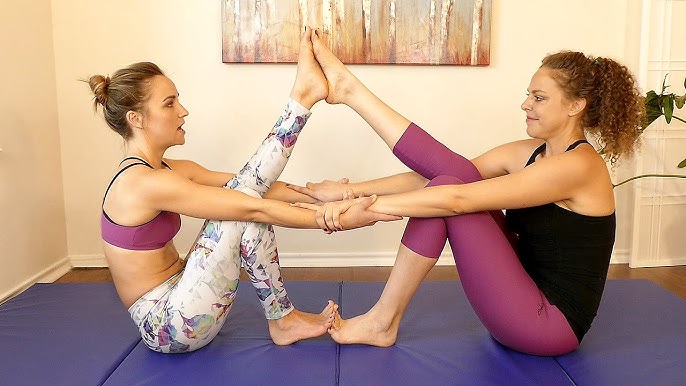
So the partner Boat pose is quite similar to the individual boat pose. You simply need to hold each-others hands while you are sitting facing each other and your feet must be joined to each other so you are making an inverted V shape with your feet while your hands are connected.

Performing this asana helps you build your core strength, teamwork and promote stability. It is usually a playful asana that also invites tickles, trust and eye contact.

Seated Twists

The twisting postures are excellent for stretching the back and the lower spine. The seated partnered twist involves sitting cross legged back to back holding hands in that twist while you are connected with a partner. This twist will not only become deeper but your stretches will feel more connected and you will reap therapeutic benefits out of the twist.

How Does a Couple Yoga Boost Relationships?

Performing yoga in itself is a powerful technique to boost better mind body connection and practicing couple yoga is quite beneficial in boosting relationships between the couples. It is because while you are performing asanas, you are not just engaging in physical movements, but you are actually learning to build emotions like trust, patience, kindness, communication and presence for one another.

This continues even when your session is you over and you will find enjoying each other’s presence without mobile phones and become more patient with each other’s problem and personality types.

If you are someone who is interested in learning in depth about yoga, teaching methodology, and yoga philosophy and sharing your certified knowledge with the world then signing up for a  Yoga TTC Certification India can be the best course.


27May

Akasha Yoga Retreat in Goa: A Deep Escape for Relaxation, Healing & Restore Inner Balance

The Akasha Yoga Retreat in Goa offered by The Adi Yogam School is an exquisite retreat that offers a lasting experience for the students. Based along the beautiful beaches of Arambol in North Goa, the Akasha Retreat offers the perfect opportunity that allows one to practically experience healing.

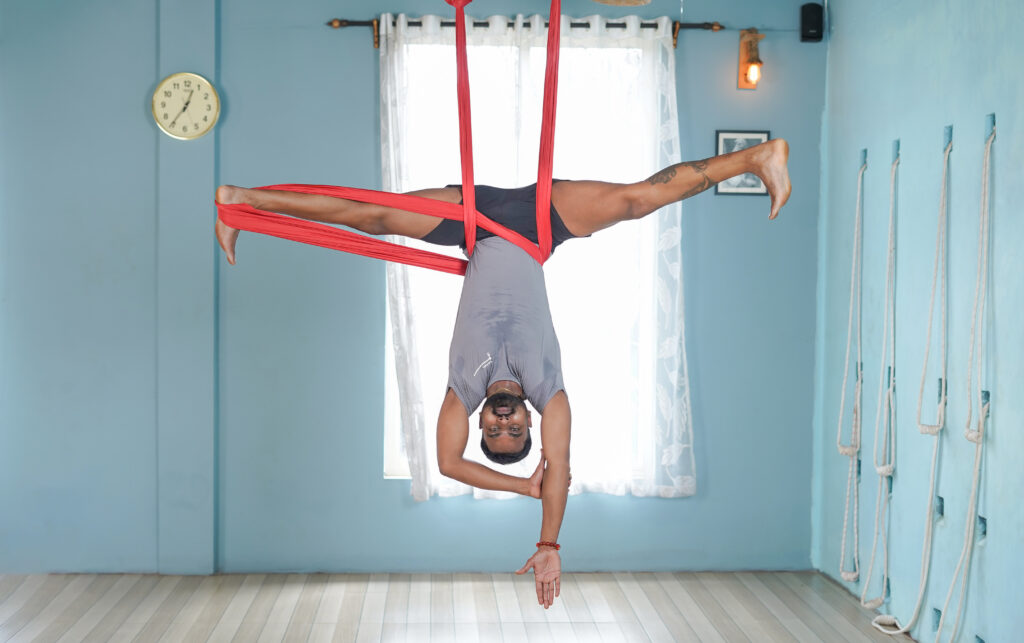
The word Akasha is a Sanskrit word which means Ether or Space and denotes a limitless element of nature. Akasha also means sky. The yoga retreat in Goa offers the students aerial mobility so as to facilitate them to experience flying. At the retreat the students get to reconnect with themselves by releasing physical tension, mental noise and emotional fuss midair and experience true living

Akasha Retreat offers its students a playful experience of aerial yoga with trauma informed practices that are structurally designed to heal the person’s body and mind. The best part is that whether you are an experienced Yogi or a beginner in yoga who simply wants to experience aerial yoga, the retreat has something for everyone.

The best part of the program is that it offers you a pressure free safe environment where you can explore the feeling of flying mid air while letting go of your emotions, mental noise and face your fears hanging upside down while exploring modalities. This practice opens you to newer perspectives in life and practically gives you powerful freedom of experiencing something like never before. Let’s dive into understand how the Akasha retreat offered by the AdiYogam school is a perfect haven for relaxation, healing and restoring your inner balance.

What Does the Akasha Retreat Offer You?

Aerial Yoga – Freedom Like Never Before

Aerial Yoga is also known as Flying Yoga or Anti-gravity Yoga. It is one of the best forms of yoga that helps you in experiencing mid-air yoga flow while defying gravity. The traditional way of practicing yoga on the ground is definitely beneficial but experiencing it on a hammock hanging mid air is completely new and gives you a sense of freedom like never before. Here the traditional postures are practiced over the hammocks and it helps in decompressing the spine, strengthening the upper body and relaxing the mind.

Restorative & Nidra Yoga Sessions in the Hammocks

AdiYogam is popular for its yin yoga retreat Goa. When you practice Restorative Yin yoga or deep stretches or the simple sessions of Yoga Nidra on mat, it is no doubt relaxing. But imagine doing it while floating mid air. The combined benefits of hammock practice as well as restorative yoga elevates healing and relaxation.

Sound & Somatic healing

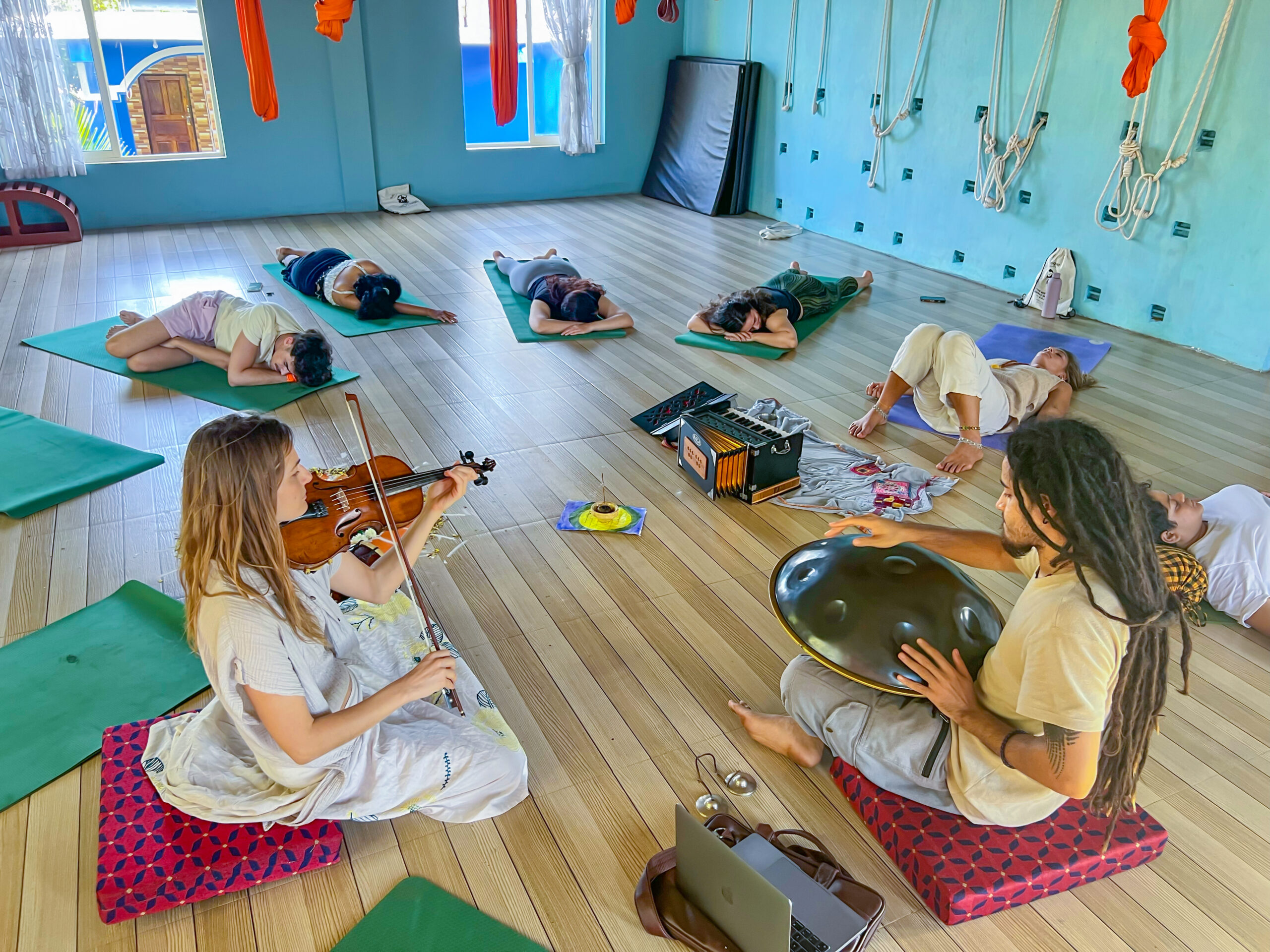
At the Akasha Yoga Retreat, you also get a chance to experience sound and somatic healing through the soulful vibrations produced using Tibetan singing bowls or mantras to induce a deep stage of healing and relaxation. The beautiful mixture of sound therapy and hammock suspension puts you in a deep meditative state and offers you clarity and healing.

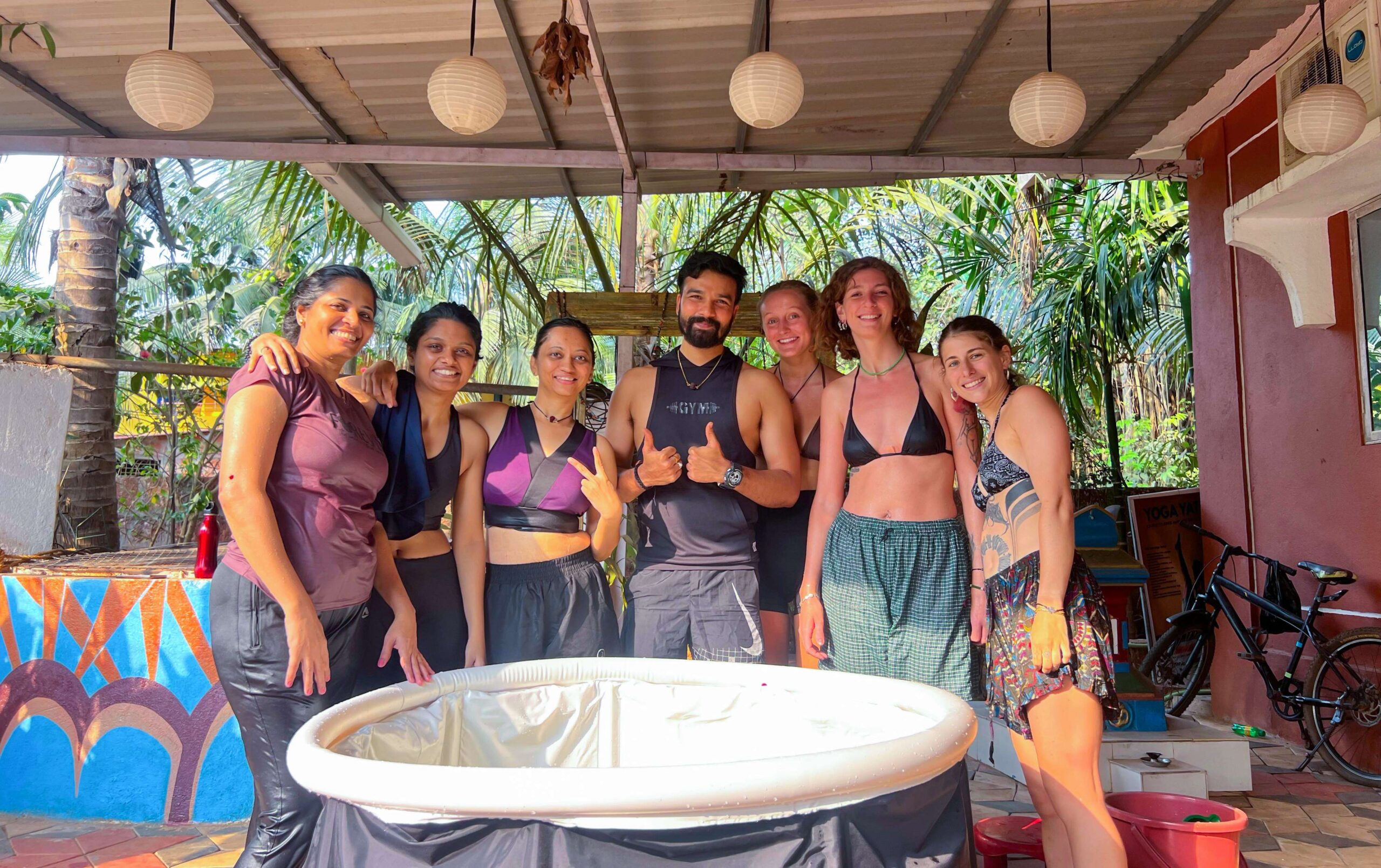
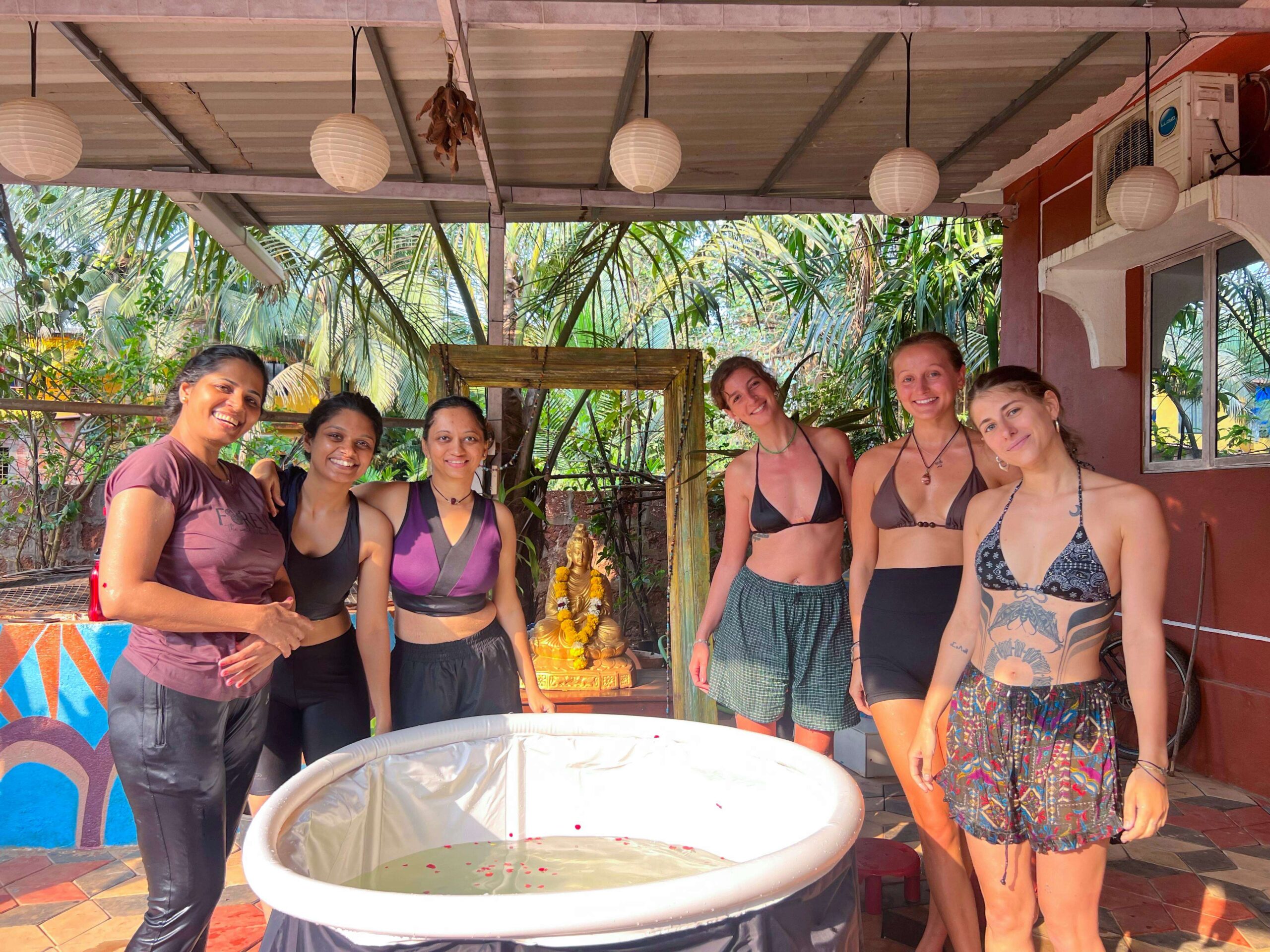
Ice Plunge Sessions

Ice plunge sessions are an exciting and quite a thrilling experience It is not only helpful in challenging your physical and mental boundaries, but also in offering therapeutic benefits like boosting blood circulation, bringing down inflammation and building endurance.

Mudgar Practice

Mudgar is a form of strength training in India that helps to support your aerial yoga practice. So it is a completely safe practice that is performed under qualified instructors and wooden clubs are used in it that help you build grip boost your strength and enhance your upper body.

Satvik Meals

The meals offered at the retreat are Satvik and high Prana meals that aim at nourishment as well as healing. The food is prepared hygienically with locally sourced ingredients that promotes your yoga practice.

Explore Goa on Wheels

Additionally AdiYogam also provides bicycles to the students for exploring Goa on the wheels. Going on a bicycle to explore the local surroundings of Goa is not only an exciting adventure but is also quite therapeutic as you get time for appreciating nature and indulging in self introspection.

The Immersive Guidance of Bharat Ramji

One of the best parts of the Akasha Yoga retreat is that it is conducted under the guidance of Bharat Ram ji. He is known for his years of experience in conducting safe and emotionally attuned classes where the students learn yoga in the correct manner and experience healing and transformation first hand. He specializes in trauma informed methodology that is combined with Aerial Yoga to make the retreat a perfect yoga experience for the students.

In addition to Aerial yoga, Bharat Ram also specializes in offering excellent Iyengar Yoga Retreat in Goa. What makes Iyengar yoga unique is the fact that it renders therapeutic benefits to yoga practitioners from all age groups and backgrounds. So whether you want to enhance your posture alignment or you simply want to heal from a certain injury, Iyengar Yoga will help you experience healing without putting any unnecessary pressure or strain on your body.

21May

Packing List for Yoga Teacher Training in Goa: What to Bring & What to Avoid

Planning a yoga trip for yoga teacher training in Goa? Be ready for surprises, transformations, excitement and a lot of amazing experiences. But before you actually join the Yoga training course, it is important to ensure that your Goa Yoga Checklist covers everything.

It often happens that when we are going for a certain trip or about to join a new journey, the packing experience can be overwhelming. The ‘overwhelmed’ feeling is not simply because of what to pack and what not to pack but the uncertainty that may accompany with the journey ahead.

But if you have your Checklist ready and you know what to carry and what to avoid, you can reduce the burden by a major percentage. So, let us dive into exploring the ultimate packing list for a yoga teacher training course in Goa.

What to Bring For Yoga Teacher Training in Goa?

Carry Comfortable Clothes

Clothing is one of the most essential items if you are planning to visit Goa for a yoga teacher training in Goa.

Goa has a tropical climate. So packing your clothing and other items In accordance with the weather is always a good idea. This is recommended to carry lightweight, comfortable and breathable clothing that allow you to stay comfortable throughout the day. Also it is to be kept in mind that heavy fabrics, restrictive outfits etc should be avoided especially to respect the modest, local and cultural surroundings.

Yoga Wear

Yoga wear is one of the most important Yoga TTC Essentials. Both material and type of clothing matter when it comes to yoga. So go for Cotton and moisture wicking fabrics that will help you stay cool in the humid weather of Goa.

In terms of clothing, you can carry Cotton tops, sportswear leggings and shorts for your yoga practice or even for randomly strolling on the beach.

SwimWear

If you are coming to Goa you cannot miss out on the swimming. So remember to pack a practical and comfortable swimwear in your Yoga Goa Packing. Outside your yoga classes, you will get time to spend on the beaches especially in the evening hours. Indulge in a therapeutic swim session to soak in the absolute vibe of Goa.

Yoga Practice Must Haves

Yoga Mat

Usually yoga schools provide yoga mats but sometimes people have a personal factor associated with their mats and this has nothing to do with the color or the appearance of the mat. It is simply that the mat becomes a holistic part of your yoga practice ritual and therefore you may want to carry your own mat for yoga practice.

Yoga Props

Again like yoga mat, yoga schools may also have some yoga props. But if you are someone who requires a yoga strap or a resistance band then it is okay to carry it with you. Although avoid carrying bulky equipment as there is a high chance you can find it in Goa.

Other Essentials

Hydration Gear

Hydration is must, especially given GOA’s climate. So carrying reusable bottles and electrolytes sachets if needed helps in replenishing your energy levels and also in managing heat.

Medications

Basic first aid and personal medicines should not be forgotten in your packing list. Whether it is pain relief balm or band aids or even simple motion sickness tablets, carrying your basic first aid will help you make your stay comfortable throughout the training.

Toiletries

Even though you are recommended to live a yogic life especially during your yoga teacher training course. Carrying basic toiletries and natural care products will ensure that you are indulging in sustain sustainable living without giving up on self-care.

Journal

It is always suggested to carry your journal especially for an experience like a YTT course. It is because during the course, you will not just be learning physical asana postures but you will also be facing a lot of resurfaced emotions.

There would be times when you are feeling happy, peaceful, overwhelmed or anxious. A lot of emotions come up during yoga, so maintaining a journal will not only help you acknowledge your emotions, but also understand yourself better.

Documents

Essential documents like your passport or ID, copies of your visa, emergency contacts, travel insurance et cetera is recommended. Although you can carry them digitally but make sure that you have all your documents for the go.

What to Not Being to Goa?
Too Much Clothing

When people think about Goa, they might end up packing a lot of stuff. In reality the yoga clothes will be repeated more often than you think and the laundry services are easily available. So, pack really light so that you can also get a chance to explore and shop from the local flea markets of Goa.

Expensive Jewellery

Getting expensive jewellery or valuable items is definitely not recommended as not only you will be able to remain carefree during your entire trip, but you will also indulge in simplicity which the yoga schools also emphasize upon.

Lastly, Unrealistic Expectations

Last but not the least, it is suggested to avoid packing unrealistic expectations. It is to be kept in mind that signing up for a yoga teacher training course will not always be a smooth journey. There will be challenging times both physically and mentally.

The nature of the training can be intense, so you will have to push your physical boundaries as well come with an open mind curiosity and a willingness to learn, and you should be good to go. Safe travels!

15May

200 Hour Yoga Teacher Training in Goa: North Goa or South Goa – What to Choose?

Choosing to take ahead a journey of a dedicated 200 hours yoga teacher training in goa can be an adventurous, and an exciting decision.

Goa the coastal paradise of India has today become a global favourite as a yoga destination. It not only attracts tourists and travelers who are looking for meaningful escapes, but also for beginners and aspiring yoga teachers who want to take ahead their yoga journey and build refinement along with professional skills to establish a specific niche for themselves in the Wellness industry.

The tropical atmosphere, multicultural yoga community, beachside lifestyle and authentic yoga schools in Goa are the biggest reasons that attract yoga practitioners from across the globe. But the actual question remains whether to pick North Goa or South Goa for their yoga teacher training courses.

Regardless of which side of Goa you sign up for, be ready to have unique experiences and learning in your yoga journey. Let’s dive in to learn for pursuing a 200 hour yoga TTC in Goa what side of Goa should you choose.

How Are North and South Goa Different?

The North Goa vs South Goa Yoga TTC may offer the same curriculum but the actual experience of the course differs. So North Goa is popular for having a vibrant social life with a backpacker culture that is best for people looking for lively energy and cafes and a social environment.

On the other hand South Goa is known as the peaceful side of Goa where Wellness retreats, quieter beaches, slow living and deep relaxation thrives. So which part of Goa should you pick for your training completely depends on what you are looking for and how you want the location to affect your overall teacher training experience.

Why Do People Pick North Goa For Yoga TTC?

North Goa has a creative vibe where social interaction thrives and variety and activities are offered to tourists. So if you are someone who prefers this you can choose popular northern beaches such as the Anjuna or Arambol or the Vagator beach.

Strong Multicultural Environment

You are bound to interact with a strong multicultural environment. The best part about North Goa is that it has a highly active multicultural traveller scene.

So you get a chance to meet people across different cultures and communities. This helps you build myriad friendships, networking and strong cultural exchange and also resonate with the global Wellness community.

Dynamic Local & Cultural Environment

After your training hours, you can have get the opportunity to explore cafes, live music, markets events around the beach or even workshops. These activities not only make North Goa happening but also drive energy and creativity.

Best To Learn The Social Environment

If you are someone who loves meeting new people, getting in touch with energetic spaces and even exploring social environments, then North Goa can be your scene.

Challenges Related To North Goa 

Possibly More Distractions

The thing about North Goa is that even though it is dynamic and highly outgoing. If you are visiting Goa with the main purpose of seeking yoga, then it may happen that you find the place a bit laden with distractions in terms of crowded areas, too many tourists and noise.

Less Opportunities To Enjoy Solitude

Most of the times when tourists come to Goa seeking yoga, they are not just looking for right alignment and asana practice, but they are looking for means to find solitude and peace. For these reasons North Goa may not be the ideal destination as it may feel overstimulating at times.

Why Do People Pick South Goa For Yoga TTC Certification

South Goa may not be as popular as N Goa, but it is definitely more bent on the Wellness side of Goa. So some popular South Goan beaches are the Palolem beach, the Patnem or the Agonda beach. These are pretty famous for their retreat style environmental setup and living that is focused around nature and quietness on the beaches.

Ideal For Introspection

The overall environment of South Goa is such that it naturally supports introspection and consistency. There is no nightlife distractions that further enable practitioners to maintain yogic routine and delve deeper in there yogic practices.

Better Mind Body Connection

Entire Goa is laden with beautiful and clean beaches, yet in South Goa you will feel that there is lesser commercial development. Therefore this results in having a better connection with nature as well as a better mind body connection with yourself.

Good For Healing & Recovery

If the main reason of your visit to Goa is to seek peace, healing and recovery, then South Goa should be definitely your go to place. This is because the environment itself fosters healing, growth and clarity. You will get ample amount of time in South Goa to indulge in meditation practices as well as journaling. The slower pace of South Goa naturally supports these practices.

Challenges Related To South Goa 
Less Social Variety

So South Goa lacks on the part of having very few social activities and entertainment opportunities. This may at times feel repetitive and isolating.

Less Convenience Options

In terms of transportation and convenience as well, North Goa is more developed in terms of infrastructure support. South Goa is developing and it is more spread out therefore you will have to be careful about the transportation options.

What Should You Choose For Serious Yoga Practice?

Whether you pick North Goa or you pick South Goa, be rest assured that you would be receiving the Best Yoga Teacher Training Goa.

Although, choosing North Goa will help you explore the cultural and vibrant atmosphere of Goa, that is what makes Goa traditionally famous for. And if you choose South Goa then you are in for healing introspection and stronger retreat experience. So what is the perfect location for you completely depends on what you are looking for.

04May

How Safe Is Yoga Teacher Training in Goa for Solo Female Travelers?

Whether it is work, leisure, travel or an exciting adventure around the globe, the most important concern for a woman is safety. This becomes especially important when they are planning to travel solo. These days Yoga teacher training courses in Goa are becoming pretty popular amongst the solo female travelers.

Whether it is the attraction of beautiful beaches of Goa or the simple joy of practicing yoga, all by making the journey in solitude, being just by yourself is a completely liberating feeling which one must enjoy. To answer the main question – How safe is yoga teacher training in Goa for solo female travellers? Let’s dive in to understand.

Goa Has a Strong Reputation for Being a Safe Destination

This is the hostel paradise of India has a strong reputation for being a safe destination, especially when it is compared to other parts of the country. Goa not only has a strong infrastructure that supports tourism but also caters to a very large international visitor base.

In addition to developing safety protocols in the state, Goa is also relatively relaxed and liberal towards hosting people from various cultural backgrounds from across the globe for the yoga teacher training in Goa.

So yes, Goa is definitely a tourist and friendly place and open to a diverse community including solo women.

YTT is a Safe & Amazing Way to Experience Goa, Solo

Practicing Yoga on the beach of Goa is definitely a transformative experience. One of the most amazing and safe ways to experience Goa especially solo, is to join Yoga teacher training courses.

The reason being that in place of independent travel the ytt courses offer you a structure. So you would be not staying in the schools, along with having fixed daily schedule, experiencing community living and guided by the friendly local community and staff of the school.

So the supportive environment of the yoga schools not only help you get acquainted with the local culture first, but allow you space to soak Goa at your own pace.

Supportive Community Bonding

The yoga courses in Goa offers a strong community support system. So while you are in Goa as a solo traveller, you will find yourself to align with fellow students, other solo travellers, women tourists, teachers and like minded yoga seekers.

This community allows you to benefit from shared experiences, experience emotional safety and most importantly not feel lonely while you’re meant to enjoy travelling alone.

South Goa vs North Goa

Whether you are a party person or you are a splendid yoga practitioner, Goa has everything for you.

For example, if you want to experience wellness retreats, yoga schools and are looking for quieter places then South Goa is best as it is the hub of yoga schools.

And if you are someone who wants to see the more cultural side of Goa and experience the nightlife, carnivals and myriad possibilities, then exploring North Goa could be beneficial.

But it is to be kept in mind that even though the place is pretty safe even at night, you should always be aware and conscious.

Government Measures For Safety

Government has built a strong structure that supports safety and boosts the Goan tourism. So there are dedicated tourist police, units like the Pink force and increased patrolling especially in the tourist zones. These initiatives not only monitor crime but also ensure that solo women are safe on their own.

Risks You Should Be Prepared About

No matter how safe a place is, there are there is always the possibility of some mishap so some realistic risks you should consider are –

  • Make sure to be safe and conscious during the night time avoid isolated roads and beaches.
  • Even though Goa is popular for its party culture avoid Mingling with absolute strangers as there is a possibility of drink spiking other issues.
  • It is always advisable to stay conscious in strange places. It is also recommended to avoid strangers

Safety Tips For Female Yogis

  • Be informed about the place. It is one thing to explore a certain location upon arrival, but it is one thing to have done your homework beforehand.
  • Make sure that the accommodation you are selecting is a verified housing and not an unknown guest house.
  • Even though Goa is quite multicultural and tolerant towards clothing and culture, yet it is always recommended to dress contextually.
  • As a solo tourist man or woman, you should make sure to avoid deserted roads or isolated beaches, especially during the night time.
So, Is It Safe Overall?

Being aware about the risks and taking into consideration the safety guide will help you enjoy Goa at its best.

And, to answer the question, Yes! Goa is definitely safe for solo female travellers.

27Apr

High-Intensity 200 hours Yoga TTC Goa: Meaning, Styles & What Makes It Different

In the world of Yoga and wellness Goa has become a popular destination for Yoga and yoga teacher training courses. Some of its most popular courses are the 200 hours yoga teacher training in goa, especially the high intensity courses that provides intensive learning along with an immersive learning experience. But what makes high intensity different from the usual 200 hours YTT? Let’s dive into have a clear understanding about the course.

The Foundational Course of 200 Hour YTTC

The 200 hours Hatha Vinyasa yoga TTC goa, is basically a foundational certification course that aspiring yoga teachers seek to become professional yoga teachers.

Usually this course is recognised by the Yoga Alliance and it offers asana practice, breath work techniques, teaching methodology, anatomy, yoga philosophy and meditation. The reason that this course is called a foundational course is because it inculcates various styles and modern teaching attributes along with offering the traditional wisdom of yoga.

What Does High Intensity Refer To?

The reason that this course is known as high intensity is because it functions every day for a time duration of at least three to four weeks and these schedules are usually structured long and require full immersion of the students.

So a normal day at the retreat would begin by waking up early morning, followed by meditations, asana practices, theory classes, teaching practice and relaxing sessions in the evening hours. The entire day is designed for a conscious and a discipline training rather than just a casual teaching course retreat.

Why Pick Goa for Experiencing This?

Now there are many places across the globe that may offer intensive YTT Courses. But Goa has a unique plethora of advantages that supports high intensity training. This includes the peaceful natural environment of Goa, the multicultural yoga community, economic and high quality training as well as balance of contemporary requirements and traditional discipline.

The overall atmosphere of Goa supports intensive training as well as an overall reset.

What Styles Are Covered in a High Intensity YTT Course?

Hatha Yoga

Hatha yoga is called as the Mother of all styles of yoga. It is one of the most foundational styles and often happens to be a part of all TTC programmes.

So Hatha Yoga is a slower practice in yoga that includes stability, alignment and breath work awareness while correctly decoding the posture mechanics and meanwhile building strength and endurance in practice.

Ashtanga Yoga

This Yoga is a physically demanding style of yoga that requires you to follow a fixed sequence of asanas. Ashtanga yoga requires an active synchronization between breath and movement and is helpful in building endurance discipline as well as strength.

Vinyasa Yoga

Vinasa is quite similar to Ashtanga Yoga just that here the sequences are more flowing and creative in nature it is an entirely breathless movement where we Ujjayi pranayama or the Victorious breath is used to lead creative transitions

Restorative Yin Yoga

Restorative Yin yoga is especially a popular demand between wellness seekers as well as yoga teachers as it offers flexibility along with deep relaxation and recovery of the nervous system.

The reason that this is included in the foundational 200 hours course is because it allows the students to relax and calm down after the intensive sessions of Ashtanga and Vinyasa.

Benefits of 200 Hours YTTC

Engaging Learning Environment

The learning environment in the yoga schools based in Goa are immersive and deeply engaging. Your entire day at the retreat includes you to be consciously aware about the yogic rituals right from the moment you wake up to your meals to the yoga nidra sessions you perform before sleeping.

This engagement results in conscious and faster learning along with deep understanding and lifestyle correction.

Faster Development of Skills

Since the duration of the course is long and the routine is followed everyday over the entire stay, so the students develop skills in a faster manner.

This also helps them build confidence, enhance their teaching ability while also improving their personal practice and body awareness.

Builds Endurance

Regular practice of yoga as well as the physical and emotional impact of asana sessions helps build physical and mental endurance. The TTC courses are demanding in nature and therefore they develop one’s mental resilience, consistency and discipline.

By the end of the course, the students observe personal growth, stronger practice as well as deep inner transformation.

Offers Meaningful Transformation

The learnings and transformations you observe at a high intensity Vinyasa course is un-parallel and it results in meaningful transformation. So by the end of your course you will find that you are able to process and regulate your emotions in a better manner.

You are able to make decisions more swiftly and the lifestyle changes that follows post the course reflects deeper learnings that go beyond the certification.

Possible Challenges to Be Aware Of

Since the duration of the course is long and the nature of a high intensity 200 Hours YTT Course is demanding. So it is possible that as students you will have to face challenges in terms of physical exhaustion, mental resilience as well as the emotional regulations.

So being aware and prepared about it helps you handle them better and avoid getting tired or exhausted about it.


21Apr

What is Cyclic Meditation & Why It Works Benefits and Complete Guide?

In a fast-paced, stress laden world such as now, meditation has become a necessity as well as a prerequisite. Whether it is to relax your nerves, regain your energy levels, prepare for the day ahead or simply wind down from the hectic day; Cyclic meditation is a powerful and a research backed technique that allows you to retain regain your energy.

Cyclic meditation is a simple and effective technique and it is becoming quite popular amongst wellness seekers and fitness enthusiasts across the globe. So cyclic meditation is a blend of movement and stillness. It is a science backed technique that aims at offering you deep relaxation.

The most attractive aspect of cyclic meditation CM is that it offers you relaxation and it offers it pretty quick. So you don’t need to sit for long periods of silent sitting to regain your composure. Cyclic meditation has ancient roots especially in the yoga philosophies where it emerged as a powerful technique to establish connection between physical activity and mental relaxation. This technique is practiced both by beginners as well as advanced yogis who want to experience variety in addition to the traditional meditations. Let’s dive into discover what is it and how it works.

What is Cyclic Meditation?

Basically cyclic meditation refers to a guided practice where you alternate between cycles of gentle yoga asanas and deep relaxation. So the reason that the cyclic meditation is becoming globally popular today is because unlike the traditional meditations where you need to sit for long stretches of time. The cyclic setting involves you to alternate between movement asanas stretches etc. and go on to relaxation through lying down asanas like the Shavasana or movements that allow you stillness. The trick here is to perform this shift in multiple rotations so that your mind can comfortably enter a deep state of relaxation.

Usually these kind of meditations are in a guided format so that it can be performed correctly and maximum therapeutic benefits can be delivered.

Why it Works?

The reason that CM Works is because it affects both the physical body mind as well as the nervous system. So while you are practicing the asanas or engaging in movement and breath work you are releasing physical stress and tension. And when you move on to the relaxation techniques you activate the parasympathetic nervous system.

CM creates a rhythm and this rhythm allows you to relax and fully synchronize your mind and body to promote awareness. There are scientific studies that show that such kind of meditations are highly effective in reducing cortisol levels of the body, bringing down the heart rate as well as enhancing one’s emotional balance.

The Adiyogam center is one of the most authentic Yoga school in Goa that specializes in offering you yoga knowledge in its most authentic and traditional format along with such kind of meditation practices to elevate your physical mental as well as emotional well being.

Essential Cyclic Meditation Benefits

Easy Relaxation Without Fuss

It is seen that people often procrastinate or avoid meditation. Maybe it could be boredom or simply the fact that sitting for a certain stretch of time would feel impossible. But cyclic meditation rightly resolves this issue as it involves both movement and stillness.

So you need not stress about sitting in long hours of silence but simply oscillate between movement and stillness. So it promotes easy relaxation without any frustration.

Reduces Physical & Mental Tension

The best part about cyclic meditation is that it not only effects mind and removes mental tension, but also impacts your body and reduces physical discomfort. So when you are practicing CM, you naturally benefit from pain relief and bring down your cortisol levels as well as boost your nervous system and emotional resilience.

Enhances Sleep Quality

When you practice the cyclic meditation on a regular basis you can use this yoga relaxation technique before you go to bed. So your mind will naturally fall in a state of calmness and avoid overthinking and restlessness. This help you take a long night’s peaceful sleep that will allow you to heal and rejuvenate.

Boosts Awareness

This kind of meditation is a powerful way boost your mind body awareness while you are oscillating between the rhythms, you will not only better observe your physical sensations, but also concentrate on your breath patterns and how you feel mentally. This awareness allows you to engage mindfully better manage your emotions as well as promote faster recovery.

Energizes the Body

Any kind of meditation is beneficial in uplifting the energy levels of the body. But the best aspect of CM is that unlike the traditional or passive techniques, it also keeps the body active while relaxing the mind. So you will not feel sleepy or sluggish post your meditation session rather you would feel physically energized while mentally feeling calm.

Brings Down Lifestyle Issues

CM is one of the best techniques to address lifestyle related problems such as stress, fatigue, blood pressure etc. It promotes physical well-being along with nervous system balance.

Who Can Practice Cyclic Meditations?

Cyclic meditations are perfectly safe practice. This is suitable for beginners, working professional, students or anyone who is looking for relaxation with a flexible approach. Additionally, if you also want to elevate your overall well-being and better understand yoga in or gain certification to grow professionally; you can pursue a 200 hours yoga ttc in goa that will help you adapt yourself with classical yogic knowledge along with traditional asana practice, alignment based movements, yoga philosophy, teaching methodology etc. Upon the completion of the course, you will gain certification that will help you establish yourself as a certified teacher and share your yoga knowledge with the world.

13Apr

Yoga Teacher Training: Consent & Safe Touch in Modern Yoga Practice

Yoga as a global wellness movement inculcates instruction, student-oriented teaching and most importantly Consent in Yoga Practice.

Even though yoga is a traditional and an ancient practise, consent and safe touch have always been important aspects and remain to be relevant in today’s time more than ever. Although hands on adjustments is a major part of teaching in yoga, the contemporary times acknowledge the need for conscious touching.

This means that touch cannot always be neutral. It carries psychological, emotional as well as physical implications. Therefore it becomes a responsibility of the teacher to include consent and safe touch in the modern yoga practice, not just as his ethical responsibility but also as an able teacher.

What is the Importance of Consent in Yoga?

Consent in layman terms means to take permission from someone. In the field of yoga it is applied in the sense when the teacher asks consent from his students to engage in physical touch.

Although it is essential to understand that consent need not be a one-time question. It is a dialogue that remains ongoing throughout the session. May be the first day the student may not be comfortable with you on an emotional as well as a physical level.

So giving clear instructions and verbal cues could be helpful. But may be with time when the student starts trusting you and he is comfortable around you he or she may ask you for physical assistance in correction of the alignment or in hands on adjustment.

Yoga Teacher Training Ethics Involves Respecting the Fluidity of the Students Choice.

Touch – Defines the Integrity of Teaching

It is perhaps one of the most sensory experiences. Touch is in fact the only experience that delivers comfort intention, safety, discomfort and withdrawal.

Safe touch in Yoga therefore becomes one of the most important tools to inculcate as a teacher to define your integrity.

Whether your class group consists of children, women, elderly or even people of your gender and your age. Practicing safe touch and consent based teaching is what will help you grow both professionally as well as enhance deeper connections with your students and clients.

How to Ensure Consent as a Teacher

Verbal Consent – As a teacher you should make sure that the consent is clear and accessible. So you can take verbal consent from your students by directly asking them if they would like a hands on adjustment in the posture or asana they are into.

Or maybe just take a simple permission before touching the student’s body while offering him guidance in any of the poses. A simple question such as –

  • May I touch you?
  • Is it ok if I place my hands here?
  • Should I help you with this?

Tokens/ Cards – In many yoga schools as well as studios, there are tokens or consent cards. For instance the green cards usually signal a go ahead and a red card signals a no. The communication is clear even without the verbal interference.

Nonverbal Signals – The non-verbal signals would basically include body movements.

For instance a student can simply respond in a nod or raise a hand as a gesture of approval or denial. So observing the student’s body language is important in teaching.

Check ins – Lastly in spite of all the above methods of consent you should still observe the student and see if they are comfortable despite offering you approval to touch them. You can consciously adjust your interference based on their hesitation or comfort levels.

Possible Alternatives for Physical Adjustments

Say your student is not comfortable with the physical touch at all, but he needs assistance in posture correction or asana guidance. You can still effectively teach by including alternatives such as clear verbal instructions, demonstrations, encouraging to use props like bolsters, straps, blocks etc. as well as visual references.

All of these alternatives are powerful and effective and they will allow the student to grow independently.

Respect the Cultural & Physical Boundaries of Students

Respecting the cultural and physical boundaries of your students is perhaps one of the most potent tools for you. This is because your class group can come from varied cultural and personal backgrounds. So it is important to respect and value their cultural norms as well as gender based interactions.

Work on Trust Building

Trust is one of the most important bridges that will help you connect with your student. Often the students will be more physically comfortable around you when they start trusting you.

So make sure that right from your first class you are able to offer a space to your students where they can naturally unfold themselves and begin to trust you to help you guide them in their yoga journey.

Legal Considerations

Consent includes legal considerations. So if you do not take proper consent or your touch feels wrong or unsafe to the students, you may have to face complaints and encounter liability issues. This is the reason why many professional yoga institutes include consent policies and offer guidelines for safe touch.

Trauma Informed Yoga & its Necessity in Today’s Time

Touch is a unique bodily sensation that carries emotional and psychological experiences. Sometimes these experiences are good and sometimes they are trauma based. Involving in safe touch and consent based teaching help you become an able teacher.

Today many Yoga courses offered by certified yoga schools like the 200 hours yoga teacher training in goa include the importance of safe touch and consent based teaching. This is in addition to offering you Yoga philosophy, Asana practice breath work sessions, teaching methodology etc. This is because the course should not only give you professional certification, but also enable you to grow overall.

* * Special Offer for Early Bookings! * *

Book your Aerial Yoga TTC now and save €100 on your total fee.